From Risk to Recommendation: Improving Pneumococcal Vaccination in Adults

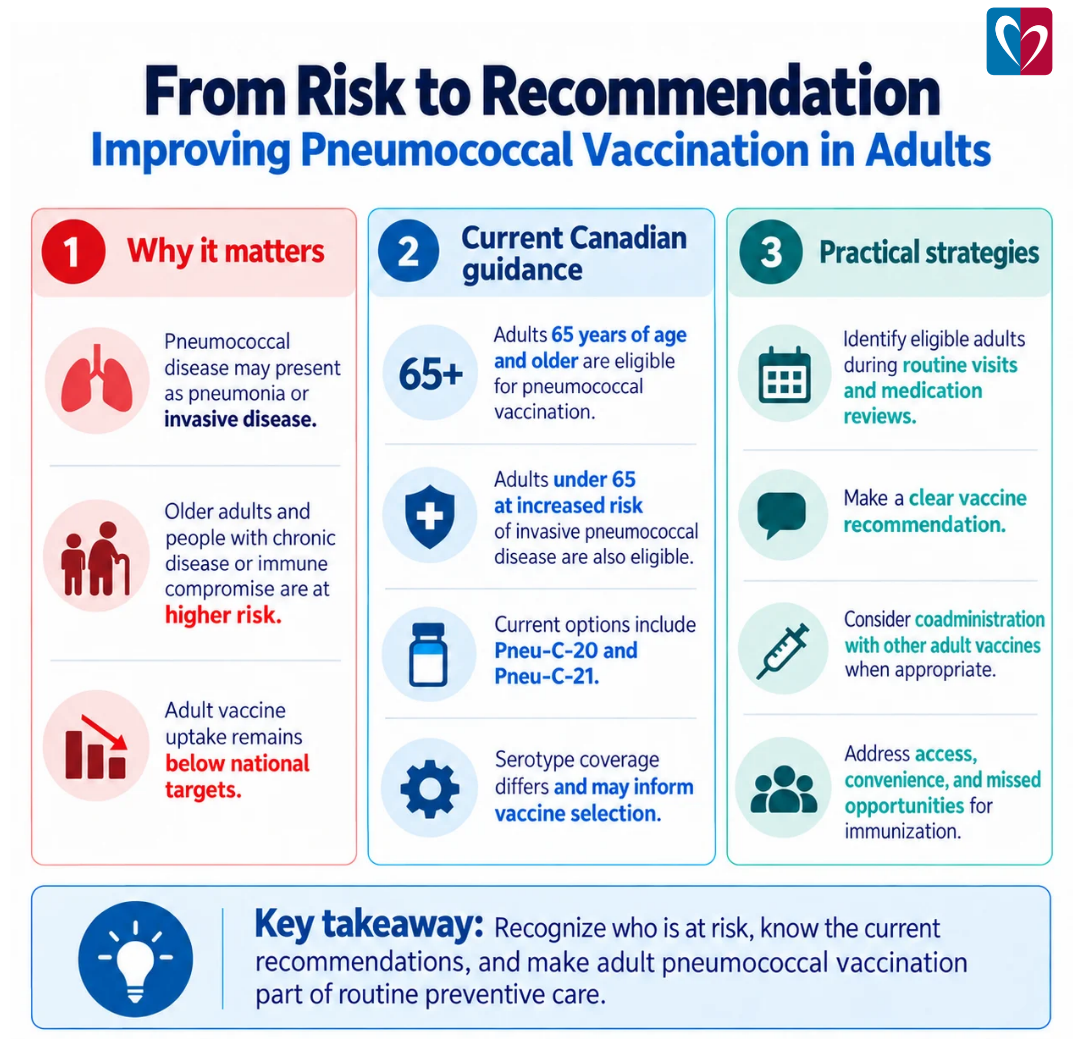 Why should we, as health care providers, and our adult patients care about pneumococcal disease?
This is a common disease, often seen as acute otitis media, sinusitis, or community-acquired pneumonia, which typically involves the lungs but is treated with oral antibiotics and resolves. However, pneumococcal disease can be invasive, causing much greater morbidity and mortality, including septicemia, bacteremia, and meningitis.
Firstly, what is age-related risk in adults?
In order to appreciate the issues, we need to understand the burden and impact of pneumococcal disease in adults. What we know is that as we age, our immune system is less robust, and we are more at risk for a variety of respiratory diseases. There is also increasing inflammation with age, sometimes referred to as inflammaging. The epithelial barrier in the lungs loses its integrity, there is a decrease in mucociliary clearance, and there is also a decrease in tissue elasticity. Thus, with aging, we experience immunosenescence, or age-related decline in immune function. Other factors that affect adults with aging include the increasing risk and increasing numbers of comorbid conditions, such as cardiac disease and diabetes. Therefore, it becomes easier to understand why older adults are at increasing risk for lung diseases and infections such as pneumococcal pneumonia.
There is also disease-related risk. That term refers to younger patients who have a higher risk for pneumococcal disease based on their underlying conditions, including those diseases affecting the immune system. Here, we can think of the myriad of autoimmune diseases, HIV, diabetes, and other conditions that may lead to poor immune function, such as chemotherapy.
What are our current guidelines for preventing adult pneumococcal disease?
On November 15, 2024, the Public Health Agency of Canada (PHAC) released the National Advisory Committee on Immunization’s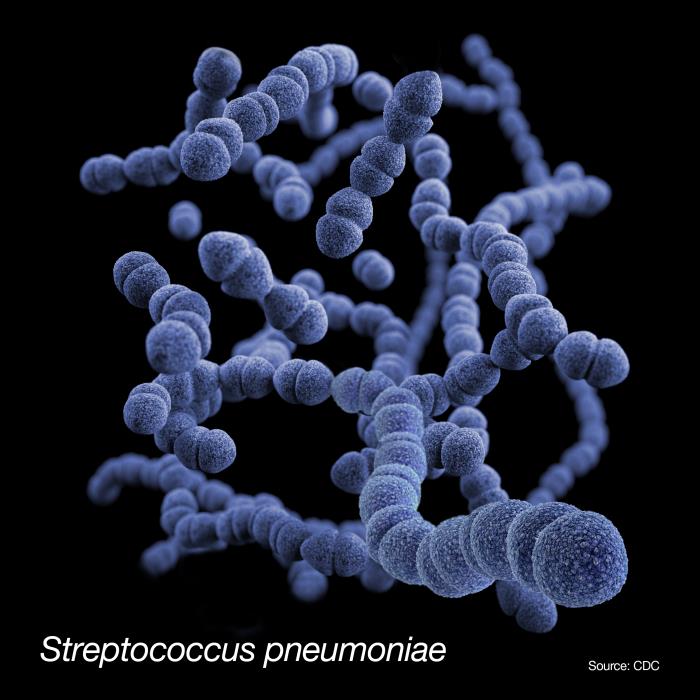 (NACI) recommendations on the use of pneumococcal vaccines in adults, including Pneu-C-21. This guidance is based on current evidence and NACI expert opinion.
Invasive pneumococcal disease (IPD) carries a substantial risk of serious health complications and significant mortality, emphasizing the importance of immunization as one of the most effective preventive strategies. Many Canadians who have been eligible for existing pneumococcal immunization programs remain unvaccinated. Pneumococcal vaccination coverage among adults aged 18 and older continues to fall short of the national target goal of 80% by 2025 (currently, the national average stands at 55% uptake among adults aged 65 years and older), representing missed opportunities for infection prevention.
Following a review of the evidence on pneumococcal vaccines, including Pneu-C-21, NACI made the following strong recommendations for public health program-level decision-making:
Adult pneumococcal immunization programs in Canada should include at least one of Pneu-C-20 or Pneu-C-21.
One dose of either Pneu-C-20 or Pneu-C-21, regardless of pneumococcal vaccination history with Pneu-C-13, Pneu-C-15, or Pneu-P-23, should be given to:
- Adults 65 years of age and older
- Adults under 65 years of age at increased risk of IPD
- Adults who are HSCT patients are eligible to receive a dose of both Pneu-C-21 and Pneu-C-20
Many different serotypes of S. pneumoniae bacteria are circulating in Canada. The most common serotypes that cause disease can vary across different populations and tend to change over time. This is why several vaccines have been developed in recent years to protect against more serotypes of S. pneumoniae bacteria. The new Pneu-C-21 vaccine protects against 10 unique serotypes of S. pneumoniae bacteria (9N, 15A, 16F, 17F, 20A, 23A, 23B, 24F, 31, and 35B) that are not included in Pneu-C-20, while the Pneu-C-20 vaccine protects against 9 unique serotypes of S. pneumoniae bacteria (1, 4, 5, 6B, 9V, 14, 18C, 19F, and 23F) that are not included in Pneu-C-21.
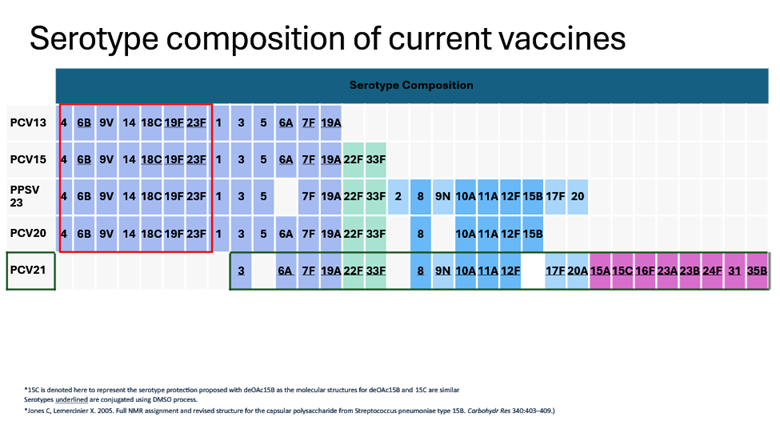
What exactly do the serotypes mean, and why do we need to know that information?
Certain serotypes may be more aggressive, may affect different age groups differently, and may have different levels of antibiotic resistance. Given the changes in the environment and fluctuating levels of risk in different parts of the country, it seems protective to have the serotypes partially grouped by age-related risk. Therefore, we can appreciate that PCV21 is specifically designed to drop some of the childhood serotypes in order to add more serotypes found in an older population. Similarly, PCV20 contains the common childhood serotypes and is used in high-risk infants and in patients at risk for pneumococcal disease, but generally under age 65. In routine clinical practice, we are not aware of which serotype is causing the disease; however, in research, we now understand why we need to cover older adults for certain serotypes.
So, what are some practical strategies for identifying those at risk and encouraging immunization?
1. Normalize the conversation: As we review general preventive measures with any given patient, how old are they, and what preventive measures should we be targeting? Mammograms, colon cancer screening, pneumonia vaccine? Every patient, at every visit, should have a review of preventive strategies, including all related vaccinations.
2. Coadministration: As we discuss the influenza vaccine or COVID-19 vaccine, let’s focus on the respiratory vaccines together and update the patient. There is guidance from NACI regarding safety and efficacy, and it is much easier to immunize a patient when they are in front of you compared to the need for a callback and another appointment.
3. Medication Review: What drugs is this patient on? Do they have an immune-modulating disease, or are they taking an immune-suppressing medication? Should they be considered to be at risk and be immunized?
4. Cost: While a number of vaccines are covered for various age groups in various provinces and territories, research shows that cost is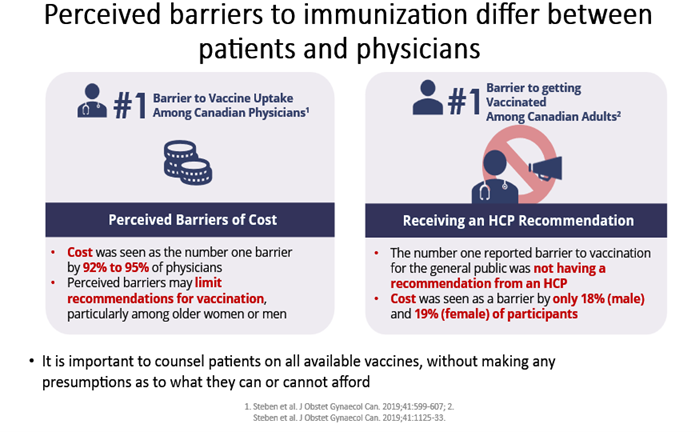 not the main driver for patient acceptance. Indeed, Dr. Marc Steben and his group showed that, though HCPs think cost is the number one barrier, only 20% of patients actually list cost as the number one issue. The vast majority state that a lack of a recommendation from their HCP is the number one barrier. So, yes, we should address the cost of a given vaccine, but let’s also remember the cost of not being vaccinated and address those risks.
5. Convenience: Again, research has shown that we, as HCPs, need to make immunization convenient. No lineups, no waiting, and easy access. While a motivated patient may struggle to come in and be immunized, we know Canadian numbers are low even for routine vaccines. We have to always be clear and competent, answering any questions, but we also have to make this easy and accessible for the patient. Certainly, different approaches all have merit, including immunization in pharmacies or at the workplace. We can consider many options, as we saw with COVID-19 vaccines, when mobile clinics, extended hours, and other options were supported. There is “no wrong door” for immunization. So, let’s collaborate, let’s advocate, and let’s immunize.
More Practice Insights: What is the LDL threshold (or ‘target’) post ACS?
Enjoy this area of study? Check out our related OnDemand content:
 Immunizations Across the Lifespan 2026
This blog was developed by the Collaborative CME and Research Network with a grant from Merck.
References
Public Health Agency of Canada. Recommendations on the use of pneumococcal vaccines in adults, including PNEU-C-21: Summary of National Advisory Committee on Immunization Statement. 2024.https://www.canada.ca/en/public-health/services/publications/vaccines-immunization/national-advisory-committee-immunization-summary-recommendations-use-pneumococcal-vaccines-adults-pneu-c-21.html.
Public Health Agency of Canada. Recommendations on the use of pneumococcal vaccines in adults, including PNEU-C-21: National Advisory Committee on Immunization Statement. 2024.
https://www.canada.ca/en/public-health/services/publications/vaccines-immunization/national-advisory-committee-immunization-statement-recommendations-use-pneumococcal-vaccines-adults-pneu-c-21.html.
Public Health Agency of Canada. Pneumococcal vaccines: Canadian Immunization Guide. 2026.
https://www.canada.ca/en/public-health/services/publications/healthy-living/canadian-immunization-guide-part-4-active-vaccines/page-16-pneumococcal-vaccine.html.
Public Health Agency of Canada. Adult National Immunization Coverage Survey: 2023 results. 2023.https://www.canada.ca/en/public-health/services/immunization-vaccines/vaccination-coverage/adult-national-immunization-coverage-survey-2023-results.html.
Public Health Agency of Canada. Vaccination Coverage Goals and Vaccine Preventable Disease Reduction Targets by 2025. 2022. https://www.canada.ca/en/public-health/services/immunization-vaccine-priorities/national-immunization-strategy/vaccination-coverage-goals-vaccine-preventable-diseases-reduction-targets-2025.html.
Public Health Agency of Canada. Summary of the NACI Seasonal Influenza Vaccine Statement for 2025–2026. Can Commun Dis Rep. 2025;51(9). https://www.canada.ca/en/public-health/services/reports-publications/canada-communicable-disease-report-ccdr/monthly-issue/2025-51/issue-9-september-2025/summary-naci-seasonal-influenza-vaccine-statement-2025-2026.html.
Steben M et al. A National Survey of Canadian Physicians on HPV: Knowledge, Barriers, and Preventive Practices. J Obstet Gynaecol Can. 2019;41(5):599-607.e3.
Steben M et al. A National Survey of Canadian Adults on HPV: Knowledge, Attitudes, and Barriers to the HPV Vaccine. J Obstet Gynaecol Can. 2019;41(8):1125-1133.e6.
Stratoberdha D et al. Barriers to adult vaccination in Canada: A qualitative systematic review. Can Pharm J. 2022;155(4):206-218.
copyright © 2026 CCRN
Any views expressed above are the author's own and do not necessarily reflect the views of CCRN.
We hope you enjoyed this CCRN Practice Insights Article! If you found it valuable, be sure to like, comment, and share it with your colleagues.